


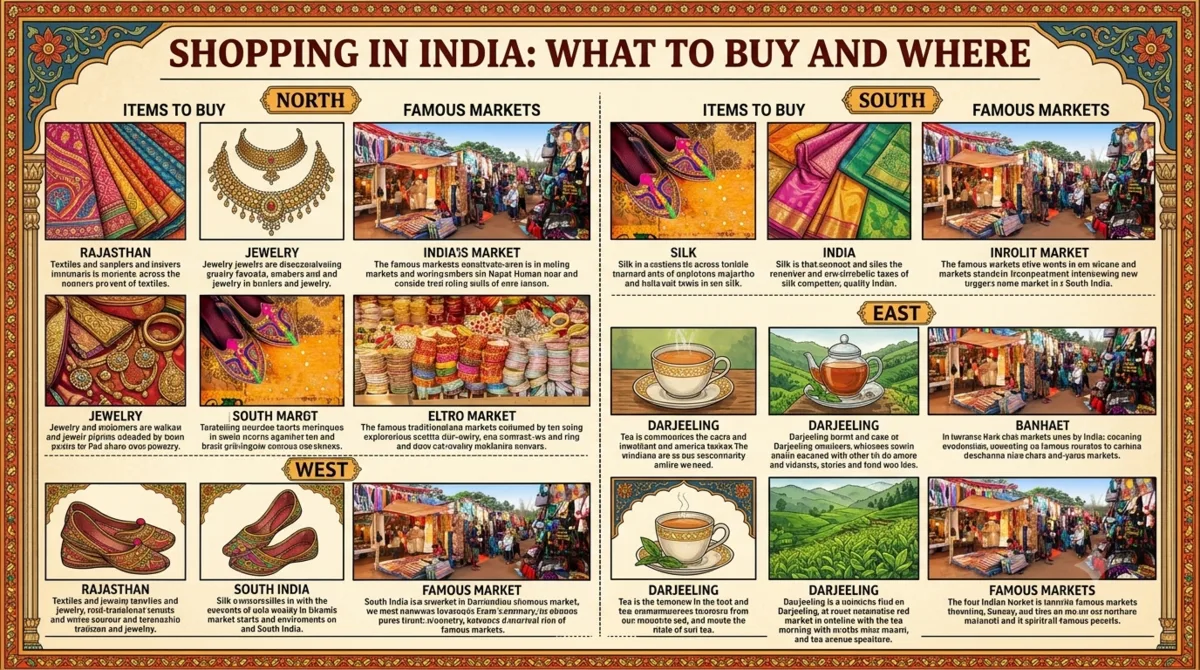
Shopping in India is an experience in itself. The markets are full of handmade textiles, jewellery, leather, spices and crafts, often made in the region you are standing in, and prices are a fraction of what you would pay at home. It can also be overwhelming, with plenty of pressure and a few scams to sidestep. This guide covers what is worth buying, the best cities for each thing, how bargaining works, and how to shop without getting caught out.
What this guide covers
What to buy in India
The best cities for shopping
Gems, textiles, blue pottery
The best all-round shopping city in India. Bazaars for block prints and jewellery, and workshops where you can watch craftsmen work.
Everything, in one place
From the lanes of Old Delhi to fixed-price government emporiums that gather crafts from every state, useful if you want quality without hard bargaining.
Antiques, textiles, miniatures
Rajasthan's smaller cities are strong for spices, textiles, and miniature paintings, with a more relaxed pace than the capitals.
Silk
Famous for Banarasi silk saris and scarves, woven in the city for centuries. Buy from established shops to be sure of the real thing.
Spices, coffee, coir
Spice country produces cardamom, pepper and coffee, along with coir and sandalwood crafts.
How bargaining works
In markets and small shops, prices are expected to be negotiated, and the first quote is usually well above the real price. Be friendly, take your time, and be ready to walk away, which often brings the price down. A rough rule is to start below half and settle somewhere in the middle, but treat it as a relaxed back-and-forth rather than a battle. In fixed-price shops, government emporiums and malls, the price is the price, and these are the easy option if you would rather not haggle. Shopping is far easier with your own car and driver, who can point you to honest, fair-priced shops and save you carrying bags on public transport.
Scams to avoid
Most shopping trouble is avoidable. Be wary of anyone offering gems or carpets you can resell at a profit at home, which never works out. Ignore commission touts who steer you to a particular shop, as you will pay their cut in the price. For anything expensive, buy from established shops, get a proper receipt, and use the shop's own shipping and card payment rather than handing over cash to a stranger. When in doubt, the fixed-price emporiums are a safe fallback. For more practical advice on money and staying safe, see our India travel tips.
Want to shop the good places, not the tourist traps? On our private tours your driver knows the honest, fair-priced shops and workshops in each city, and there is room in the car for whatever you carry home. See our India private tours.
Frequently asked questions
What should I buy in India?
Which is the best city for shopping in India?
How does bargaining work in India?
Is it safe to buy gems and jewellery in India?
Can I ship large items like carpets home?
How do I avoid shopping scams in India?
Shop India with someone who knows the good places
Private tours with a driver who knows the honest shops and workshops. Free quote within 24 hours.
Plan a private India tour


Leave a Reply