


India holds more than 70% of the world’s wild tiger population, making it the undisputed global capital for tiger sightings. Thanks to the government’s Project Tiger conservation programme — launched in 1973 — tiger numbers have almost quadrupled over the past five decades, rising from around 1,800 to over 3,682 as of the 2022 national census.
For travellers from the USA, Australia, Spain, UK, Germany, France, Canada, or anywhere in the world, India offers something no other destination can match: a structured, regulated, and deeply rewarding India tiger safari experience within protected national parks that are among the finest wildlife habitats on the planet.
This guide is written specifically for foreign tourists who want practical, accurate, and up-to-date information — from choosing the best tiger park in India to navigating the booking system, understanding costs, and knowing exactly what to expect on safari day.
Top Tiger Parks in India for International Visitors
With 53 tiger reserves spread across India, choosing where to go can feel overwhelming. Here are the four parks that consistently deliver the best experience for foreign visitors — balancing high tiger density, quality infrastructure, and ease of access.
Park | Sighting Rate | Nearest City | Best For | Highlights |
Ranthambore Rajasthan | ★★★★★ | Jaipur (3 hrs) | Beginners | Named individual tigers |
Bandhavgarh Madhya Pradesh | ★★★★★ | Jabalpur (4 hrs) | Photography | Highest tiger density in India |
Kanha Madhya Pradesh | ★★★★ | Jabalpur (5 hrs) | Landscape & Barasingha | 940 km² park area |
Jim Corbett Uttarakhand | ★★★★ | Delhi (5.5 hrs) | First India trip | Also has elephants & leopards |
Among these, Ranthambore is the single best choice for most foreign tourists on their first India tiger safari. The park’s relatively open landscape — featuring dry deciduous forest, ancient ruins, and lakes — makes tigers easier to spot. For those who want the absolute highest density of tigers per square kilometre, Bandhavgarh is unbeatable for wildlife photography.
Best Time to Visit: Month-by-Month Safari Calendar
The India tiger safari season broadly runs from October to June, with peak viewing between February and May. Parks close during the monsoon season (roughly July–September) for conservation and safety reasons.
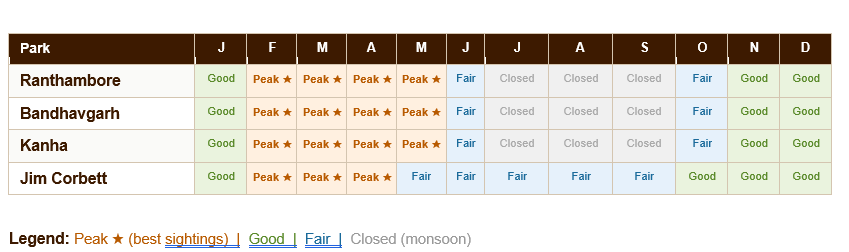
For travellers from Australia or USA planning a December–January holiday, parks are open and comfortable — mild temperatures, lower crowds. April–june is ideal if tiger sightings are your top priority: water sources shrink, forcing wildlife to congregate at predictable locations, and tigers are active earlier in the day.
What Does an India Tiger Safari Cost? (For Foreign Tourists)
Safari costs in India are structured with a foreign national fee that is higher than the domestic rate — a common conservation practice globally. Here is a realistic cost breakdown for a Ranthambore safari:
Item | Details | Approx. Cost (USD) |
Safari permit (foreign tourist) | Per person, per zone, per session | $25–$40 |
Jeep (Gypsy) rental | Shared (6 pax) or private | $12–$50 |
Naturalist/guide fee | Mandatory, per safari | $10–$20 |
Budget lodge (2 nights) | Near park gate | $60–$120/night |
Luxury jungle resort (2 nights) | All-inclusive packages | $200–$800/night |
Private driver from Delhi/Jaipur | Return transfer | $80–$150 |
A comfortable 3-night Ranthambore safari package — including two morning and two evening safaris, accommodation, and transfers — typically costs $500–$1,200 per person depending on accommodation tier.
How to Book an India Tiger Safari (Step by Step)
The Indian forest department manages safari permits through an official online system. Seats are limited and fill up extremely fast during peak months. Here is how foreign tourists should approach the booking process:
Step 1 Apply for your Indian e-Visa
Citizens of the USA, Australia, Spain, UK, Canada, and most other countries qualify for India’s e-Tourist Visa online. Apply at least 4–7 days before travel. You’ll receive a digital visa print a copy and carry your passport.
Step 2 Book your safari permit online (4–6 weeks ahead)
For Ranthambore: use rajasthan.gov.in. For Madhya Pradesh parks (Bandhavgarh, Kanha): use forest.mponline.gov.in. For Jim Corbett: use corbettonline.uk.gov.in. Select your zone, date, and session (morning or afternoon). Pay online with an international card.
Step 3 Arrange your transportation
Most parks are 3–6 hours from the nearest major airport. Hiring a private driver is the most comfortable and flexible option for international visitors. A reliable tour operator can bundle your driver, safari, and accommodation into one seamless package.
Step 4 Book accommodation near the park gate
Stay within 10–15 minutes of the main gate. Properties further away risk missing the strict 6:00 AM morning safari departure. Book at least 6–8 weeks ahead during Oct–Mar peak season.
Step 5 Prepare your documents
On safari day, carry your original passport (for foreign tourist fee verification), printed permit, and hotel confirmation. Photography equipment is welcome — no restrictions on lenses. Leave drones at home; they are strictly banned in all tiger reserves.
Practical Tips for a Successful India Tiger Safari
Clothing & Colors
Wear khaki, olive, or beige. Avoid white, red, or bright colours — they distract and potentially spook wildlife. Bring a light fleece for early morning October–February drives, when temperatures can dip to 8–12°C.
Photography
Bring the longest telephoto lens you own — 300mm minimum, 500mm ideal. Tigers in the wild are often 30–80 metres away. Silently shooting in burst mode during tiger sightings captures the best frames. Pack extra batteries; cold mornings drain them faster.
Morning vs Evening Safaris
Morning safaris (typically 6:00–10:00 AM) offer better light and higher tiger activity. Evening safaris (3:00–6:30 PM) are warm but good for ambient photography and spotting other wildlife like sloth bears, sambar deer, and leopards.
Health & Safety
Carry a basic medical kit, insect repellent (DEET-based), and personal prescription medication. Malaria risk varies by region — consult your GP before travel. Bottled water only inside the park. Do not get out of the vehicle at any point during the safari.
Money Matters
Keep Indian Rupees (INR) in cash for tips, small purchases, and village markets. Safari permits and most hotels accept international cards. ATMs are available in nearby towns like Sawai Madhopur (Ranthambore) but not inside parks.
Book Well in Advance
Popular zones at Ranthambore and Bandhavgarh can be fully booked 45–60 days in advance during peak season. If direct booking fails, a reputable tour operator with pre-allocated quota is your best alternative — especially for groups.
Conclusion
India has multiple tiger reserve and national parks which offers wildlife experiences in the world, and a tiger safari is often considered a highlight during a visit. By choosing the right India tiger safari foreigners, especially based on the connectivity and convenience your trip can be unforgettable. You can plan your trip as per the best season, and booking through trusted like DriveIndiatour can help you get the best experience. By choosing the right and famous zone, you can increase your chances of spotting the majestic Bengal tiger in its natural habitat. Whether you explore the forests of Ranthambore, the vast landscapes of Bandhavgarh, or the rich biodiversity of Kanha, every safari is known for a unique adventure. So plan with a perfect agency and enjoy your trip with an ultimate experience.


Leave a Reply