

India is a land of stunning scenery, from lush forests and endless deserts to majestic snow-capped mountains. Among these natural wonders, the highest peak in India serves as a mark of adventure, toughness, and natural strength. For nature enthusiasts, trekkers, and mountaineers, climbing this peak is more than an adventure. As a matter of fact, it is an experience that makes an unforgettable impact on the soul.
Discovering India’s Highest Peak
When we talk about the highest mountain peak in India, we indicate Kangchenjunga, which stands impressively at 8,586 meters (28,169 feet) above sea level. Located along the India-Nepal boundary, Kangchenjunga is also the third-highest mountain peak in the world, other than being the highest one in India. Its name, which signifies “The Five Treasures of Snows”, highlights the five separate mountains that shape its view.
Different from the more commercial trekking destinations, such as Annapurna or Everest, Kangchenjunga is the one that remains fairly untouched. The journey to witness India’s highest peak is not only physically challenging, but it is also spiritually fulfilling. The region that surrounds Kangchenjunga, in Sikkim, is known for its unspoiled landscapes and rare flora and fauna. Even the warm hospitality of local communities is admirable.
Know More – India Tour Packages
A Trek to Remember
Trekking to the highest peak in India is not for those who lack courage. Not only does it demand stamina and preparation, but it also requires the willingness to travel through rugged and remote terrain. Trekkers often begin their journey from Yuksom, an ancient town in Sikkim. It acts as the entrance to this natural beauty.
The trek passes through thick rhododendron woods, icy streams, and elevated grassy plains.
Trekkers, along the way, can witness the Himalayan blue poppy, which is a rare flower that is found only in the region. If you are fond of birds, you are definitely in for a treat. Witness species, such as the blood pheasant and the Himalayan monal, which live on the mountain slopes.
As you climb up, the air becomes thinner, and the weather turns more expected. Yet, the reward cannot be compared. Standing at a beautiful spot, enjoying a clear view of the highest mountain peak of India, standing at an elevated position of Kangchenjunga leaves you amazed and humbled.
Top Highest Peaks in India's
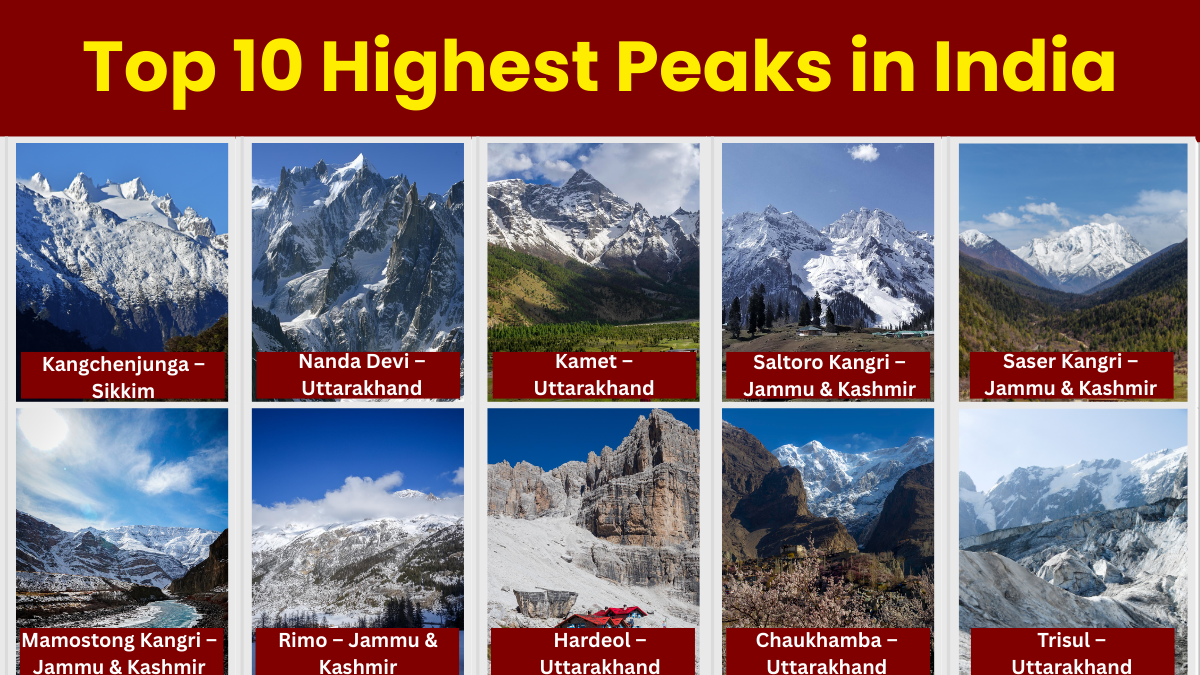
Listed below are the top 10 highest peaks in India:
Peak | Description | Height |
Kangchenjunga – Sikkim | Known as “The Five Treasures of Snows”, this is the tallest mountain in India and the world’s third-highest. | 8,586 meters |
Nanda Devi – Uttarakhand | It’s the tallest peak completely within India. Nanda Devi is worshipped locally and serves as a sign of natural beauty. | 7,816 meters |
Kamet – Uttarakhand | The highest peak in the Zaskar Range, Kamet, is not only remote but also challenging. It’s a favourite among experienced mountaineers. | 7,756 meters |
Saltoro Kangri – Jammu & Kashmir | Known for its closeness to the Siachen Glacier, this mountain is the highest point in the Saltoro Range of the Karakoram. | 7,742 meters |
Saser Kangri – Jammu & Kashmir | Located in the Saser Muztagh range, it is one of the massive peaks, adding to the beauty of the Karakoram. | 7,672 meters |
Mamostong Kangri – Jammu & Kashmir | Regarded as India’s sixth-highest peak, it is known for its closeness to Siachen. | 7,516 meters |
Rimo – Jammu & Kashmir | Near the Karakoram Pass, Rimo is the tallest of the Rimo peaks. It’s a part of the age-old trade routes. | 7,385 meters |
Hardeol – Uttarakhand | Often known as the “Temple of God”, Hardeol lies in the Kumaon Himalayas near the Nanda Devi Sanctuary. | 7,151 meters |
Chaukhamba – Uttarakhand | The highest peak in the Gangotri group, Chaukhamba, is known for its four-sided shape and beautiful setting in Garhwal. | 7,138 meters |
Trisul – Uttarakhand | Named after Lord Shiva’s trident, Trisul is a favourite in the Kumaon region and is located near the Nanda Devi. | 7,120 meters |
Cultural Significance
The highest peak of India is not just an iconic natural site. It rather holds deep cultural and divine significance. The local Lepcha and Bhutia communities consider Kangchenjunga a sacred mountain peak. It is frequently worshipped as a protective deity, and certain parts of the mountain are completely restricted, protected as holy grounds.
Spiritual travellers and trekkers honour these traditions, adding a layer of deep respect to any journey in this region. This divine association makes Kangchenjunga stand out from other peaks. It is a symbol of nature’s beauty and India’s cultural past.
Comparing India’s Peaks
While Kangchenjunga carries the title for India’s highest peak, exploring other crucial summits in the nation is quite an interesting thing to do. For example, Nanda Devi is the second-highest, which stands at 7,816 meters, and is located in Uttarakhand.
Anamudi is recognised with the honour of being the highest peak in South India, and it reaches 2,695 meters in the Western Ghats of Kerala.
Each of these peaks offers memorable and unique experiences. For instance, Anamudi is easier to visit and is bordered by heavy forest cover and sanctuaries. The regions around Kangchenjunga are isolated, mountainous, and less popular with travellers. Understanding these differences makes it easier for adventurers to choose the experiences that meet their needs and fitness levels as well.
Preparing for the Journey
Climbing or trekking near the highest peak of India requires thoughtful planning. Listed below are some significant tips for adventurers:
Physical Preparation
Train for stamina, strength, and altitude adaptability. Trekking near Kangchenjunga is tiresome and demands a great level of fitness.
Gear Essentials
Ensure you carry proper boots, layered clothing, and trekking poles. Areas with a high altitude can be hard to predict, with sudden rainfall or snowfall.
Adaptability
Make sure you take your time to become comfortable at high altitude. This lowers the risk of altitude sickness, which makes the journey secure and more delightful.
Local Guidance
Hiring competent and experienced local guides works in your favour. They ensure safety, trail knowledge, and a greater understanding of cultural and environmental standards.
By planning carefully, adventurers can look forward to focusing on the experience itself, instead of facing avoidable problems.
Wildlife and Flora
The regions around the highest peak in India are abundant in plant and animal life. This area is part of the Kangchenjunga Conservation Area, which intends to maintain its fragile natural systems.
As a traveller, you may encounter snow leopards, red pandas, and Himalayan tahr, as well as hard-to-find medicinal herbs. Every step offers a chance to witness nature’s resilience in extreme conditions.
Adventure Tourism Around India’s Peaks
Beyond trekking, the areas around India’s highest peak are main destinations for adventure tourism. You can try adventure activities, including rock climbing, river rafting, and paragliding in nearby valleys, adding thrill to your journey. Local homestays and eco-lodges provide engaging experiences. They allow tourists to connect with culture and nature.
For those looking for a blend of thrill and peace, exploring the highest peak in India offers relaxation and challenge.
Check New Blog – Top 10 Highest Waterfalls in India
Final Thoughts
The diverse landscape features make it a paradise for explorers. However, the highest peak of India seems more of an adventure like no other. Kangchenjunga shows the greatness of nature and the strong spirit of explorers.
From its trekking paths and soaring summits to its cultural heritage, this peak offers a lot more than a physical challenge. It connects you closely to India’s nature and holy traditions.


Leave a Reply